From Concept to Production: How We Develop a New Endoscope Model
Developing a new industrial endoscope model is a complex journey that combines engineering innovation, optical design, mechanical precision, and deep understanding of industrial inspection challenges. Unlike ordinary imaging devices, industrial endoscopes must operate in demanding environments where space is limited, components are difficult to access, and inspection accuracy is critical. From the initial concept to final production, every stage requires careful planning, testing, and optimization to ensure the final product delivers reliable performance in real-world applications. The development process begins with understanding customer needs and industry challenges. Different industries have different inspection requirements. Aerospace companies may need ultra-thin probes to examine turbine blades and cooling channels, while automotive manufacturers may require flexible systems for inspecting engines, transmission components, and production lines. Energy and shipbuilding industries may prioritize long insertion lengths and durability. By analyzing these application scenarios, engineers identify key requirements such as probe diameter, bending capability, image resolution, measurement accuracy, and environmental resistance.
After defining the requirements, the concept design phase begins. Engineers determine the overall architecture of the endoscope, including the optical system, imaging sensor, mechanical structure, electronic components, and software functions. At this stage, every design decision involves balancing performance, size, durability, and cost. For example, creating an ultra-thin probe requires advanced miniaturized components while maintaining sufficient image quality and mechanical strength. Achieving this balance is one of the greatest challenges in industrial endoscope development. Optical system design is a core part of the development process. The quality of an endoscope depends heavily on its ability to capture clear and accurate images in difficult environments. Engineers carefully design lenses, illumination systems, and sensor configurations to achieve high-definition imaging. Factors such as field of view, depth of focus, distortion control, and light distribution must be optimized for different inspection tasks. Advanced optical simulation and testing help ensure that the final system can reveal even small defects inside complex structures.
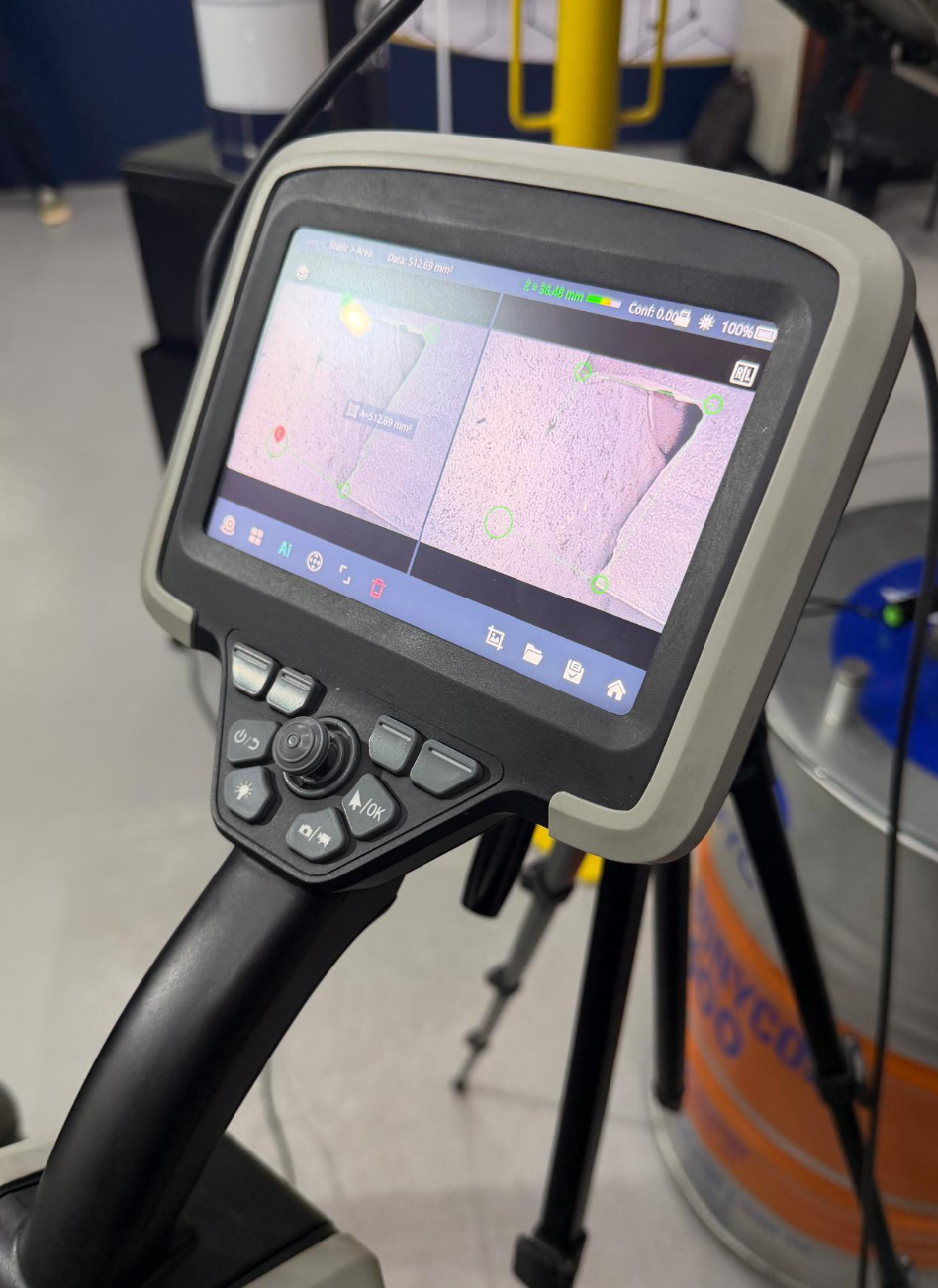
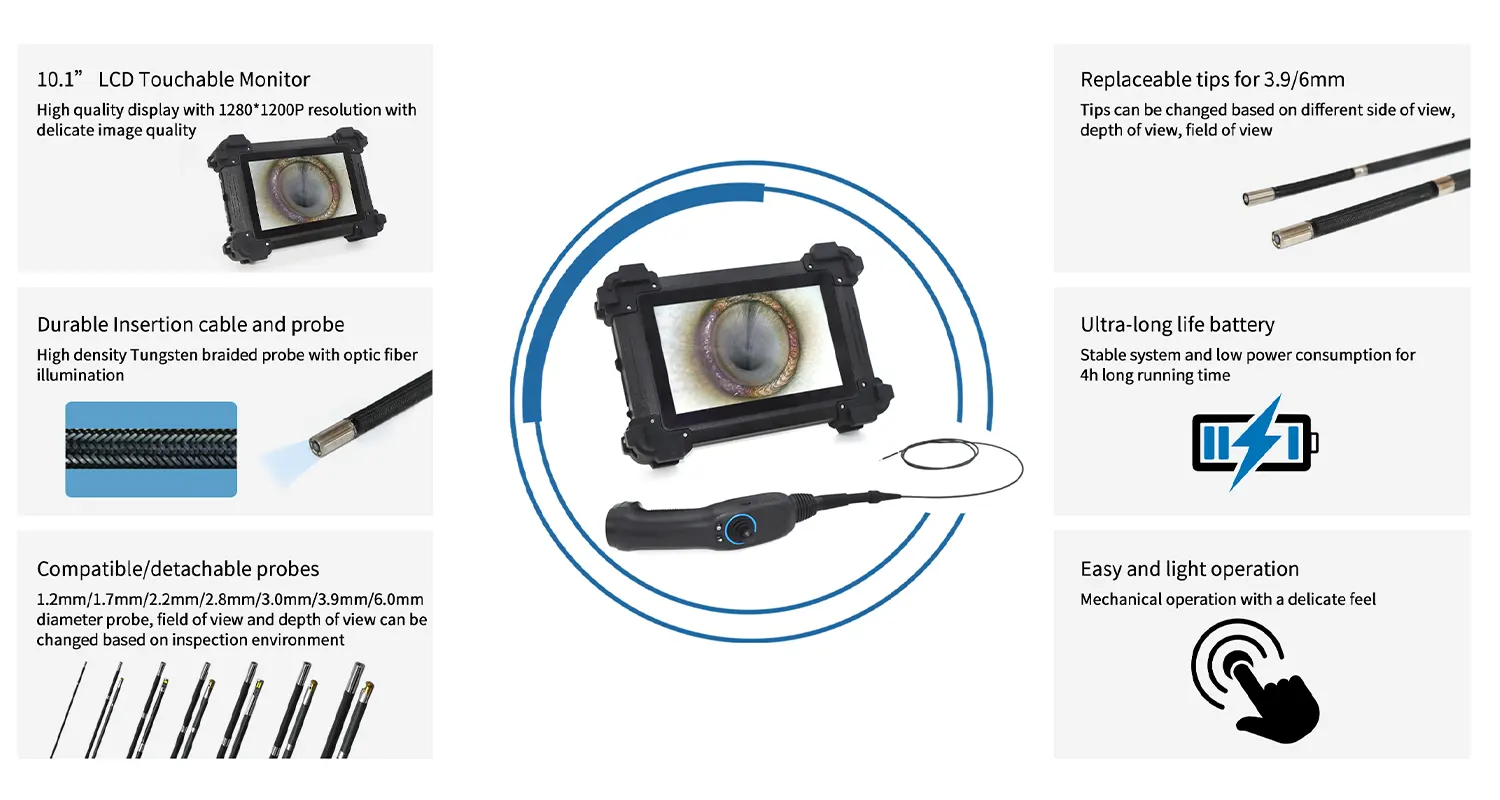
Mechanical engineering is equally important, especially for flexible and articulating endoscopes. The probe must be thin enough to access narrow spaces while remaining strong enough to withstand repeated movement. Developing precise articulation mechanisms requires advanced materials and manufacturing techniques. Multi-directional bending systems, such as two-way or four-way articulation designs, allow inspectors to control the probe tip accurately and examine hidden areas from multiple angles. Electronics and image processing technologies further enhance endoscope performance. Modern industrial endoscopes require stable signal transmission, efficient power management, and advanced image algorithms. Engineers develop systems that improve brightness, reduce noise, enhance contrast, and maintain image stability during inspection. For advanced models, additional functions such as 3D measurement, dual-camera imaging, and intelligent analysis capabilities are integrated to provide more detailed inspection data.
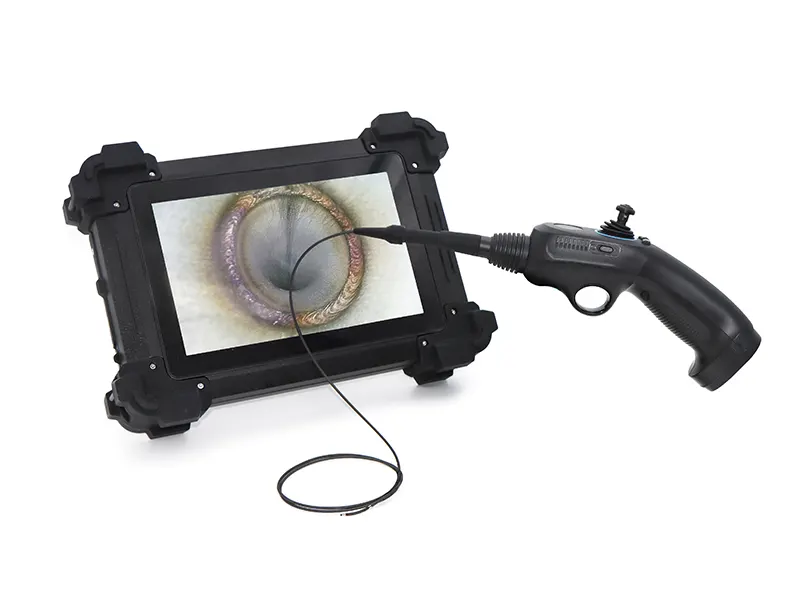
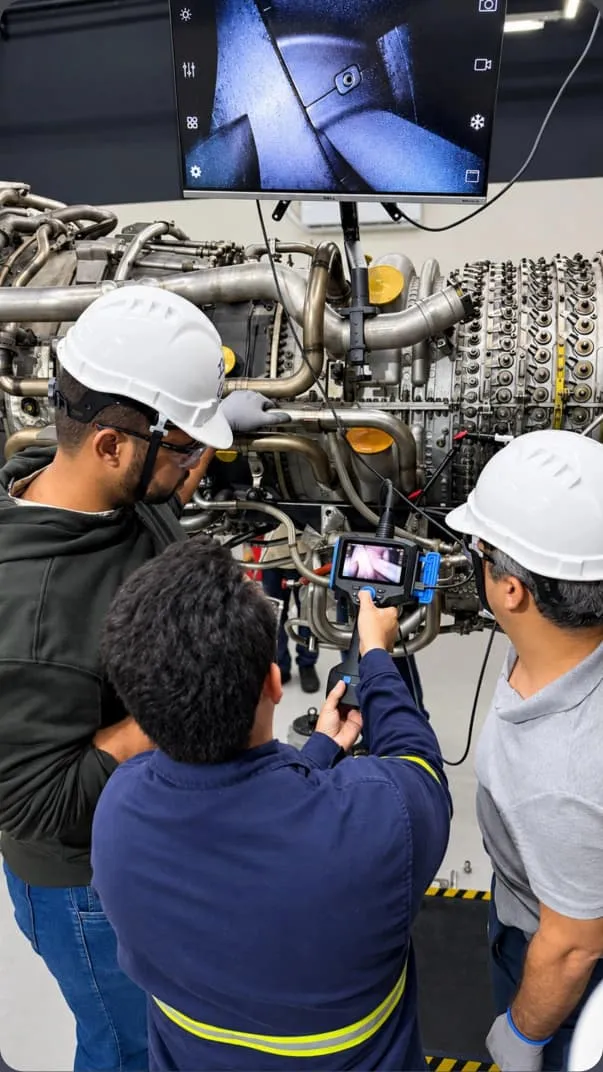
Once the design is completed, prototype development begins. Prototypes allow engineers to evaluate whether the theoretical design performs effectively in practical conditions. Each component is tested individually before being integrated into a complete system. Engineers examine image quality, probe flexibility, articulation accuracy, durability, and user operation experience. Feedback from prototype testing helps identify weaknesses and guides further improvements. Testing is one of the most important stages before mass production. Industrial endoscopes must undergo rigorous performance evaluations to ensure reliability in demanding environments. Tests may include bending cycle assessments, temperature resistance testing, waterproof evaluation, vibration testing, and long-term operation trials. Application-based testing is also conducted using real industrial samples, such as engine components, pipelines, and mechanical assemblies, to confirm that the endoscope meets actual inspection requirements.
After validation, the product moves into the production stage. Manufacturing precision becomes essential because even small variations can affect optical alignment, mechanical movement, or image performance. Strict quality control procedures are implemented throughout assembly, calibration, and final inspection. Each endoscope must meet defined performance standards before delivery to customers. However, product development does not end after production. Continuous improvement is an essential part of creating advanced inspection technology. Customer feedback, new industrial requirements, and technological progress provide valuable information for future upgrades. By continuously refining optical systems, mechanical structures, and intelligent functions, endoscope manufacturers can keep improving inspection performance and adapting to evolving industry demands.
At Zhongke Intelligent, the development of each endoscope model represents the combination of innovation, engineering expertise, and practical industrial experience. With capabilities in optical systems, image algorithms, precision mechanics, and customized inspection solutions, the company continues to push the boundaries of industrial imaging technology. From concept development to final production, every step is focused on creating reliable tools that help industries see deeper, inspect smarter, and operate more safely. The journey from concept to production is not simply about creating a new product—it is about solving real inspection challenges through technology. As industries demand higher precision and smarter maintenance solutions, advanced endoscope development will continue to play a key role in shaping the future of nondestructive testing and intelligent manufacturing.