How Miniature Image Sensors Are Enabling Smaller Industrial Borescopes
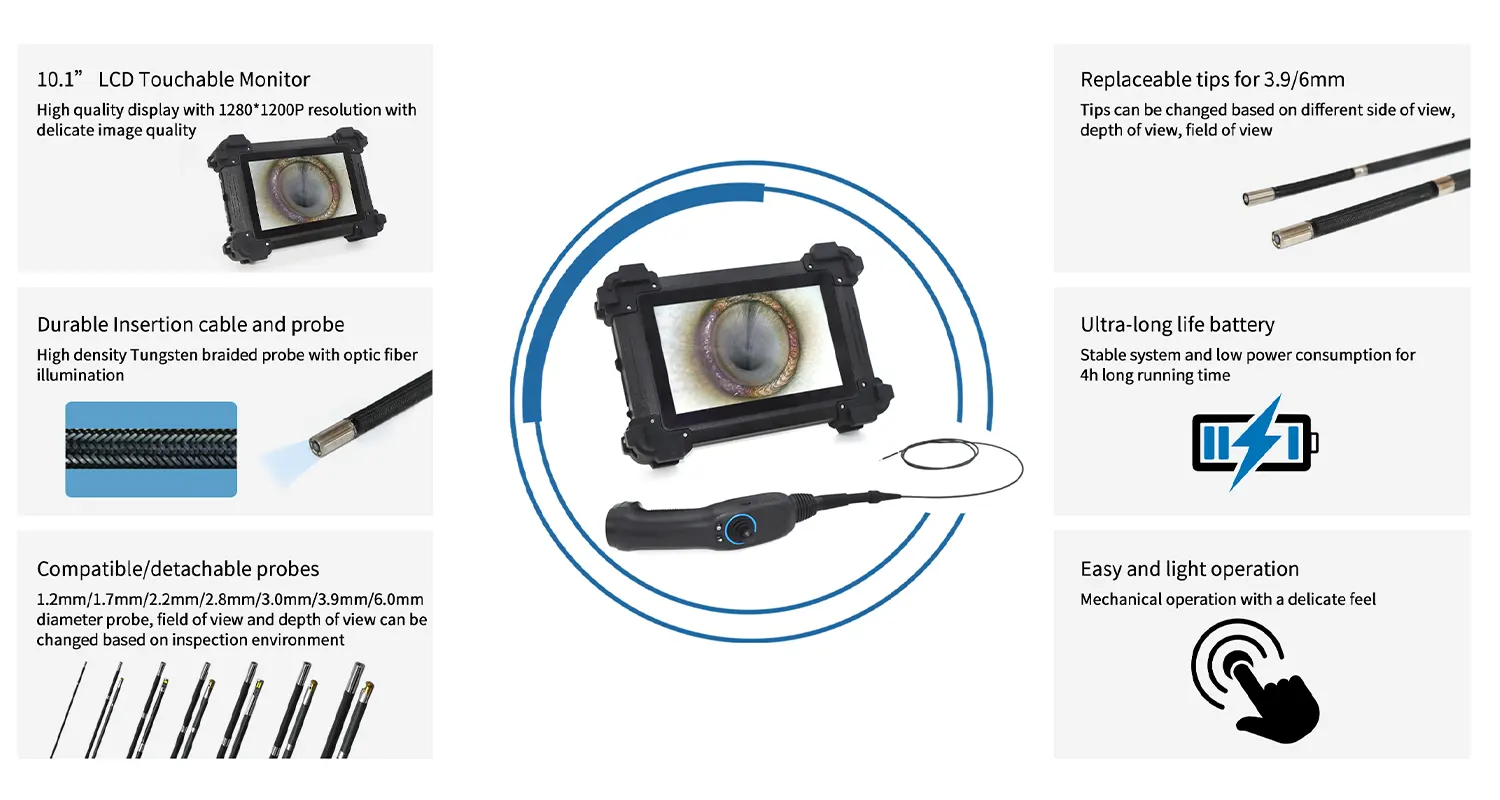
The continuous miniaturization of industrial components is creating a new challenge for inspection technology: how can engineers obtain high-quality images from spaces that are only a few millimeters wide? Aerospace engines, precision castings, automotive components, energy equipment, and other advanced systems increasingly contain narrow channels and complex internal structures. Miniature image sensors are helping solve this challenge by allowing industrial borescopes to become smaller without sacrificing the imaging performance required for reliable inspection. At the center of an industrial borescope is its imaging system. Traditional camera technology often requires relatively large sensors and optical assemblies, which can limit how small a probe can become. As sensor technology has advanced, manufacturers have developed increasingly compact imaging components capable of capturing detailed images within extremely limited spaces. This miniaturization has opened the door to ultra-thin industrial endoscopes capable of entering inspection areas that conventional systems cannot reach.
Reducing the sensor size, however, is not simply a matter of making the camera smaller. A smaller sensor typically provides less physical area for capturing light, creating challenges for brightness, resolution, noise, and color reproduction. Industrial endoscope designers therefore need to carefully optimize the relationship between the sensor, miniature lenses, illumination system, signal processing, and probe structure. The goal is to achieve the smallest possible imaging package while maintaining sufficient image quality for professional inspection. Optical design becomes particularly important in ultra-small borescopes. When the available space is extremely limited, every component must be precisely positioned. Miniature lenses must provide an appropriate field of view while controlling distortion and maintaining adequate depth of field. Even small optical alignment errors can affect image sharpness. Precision manufacturing and calibration are therefore essential for transforming a miniature sensor into a practical industrial inspection system.
Illumination is another major challenge. Smaller sensors generally have less light-gathering capability, while inspection environments inside machinery are often completely dark. Engineers must develop compact illumination systems that can deliver sufficient light to the inspection target without significantly increasing the probe diameter. Carefully designed LEDs, optical pathways, and brightness control can help compensate for the limited space available around the miniature sensor. Advanced image-processing algorithms also play an increasingly important role. Raw images captured by a miniature sensor can contain noise, uneven illumination, or reduced contrast, particularly in challenging industrial environments. Image-processing technology can improve brightness, reduce noise, enhance edges, and optimize contrast. This combination of miniature hardware and intelligent software allows a very small probe to produce images suitable for detailed engineering analysis.
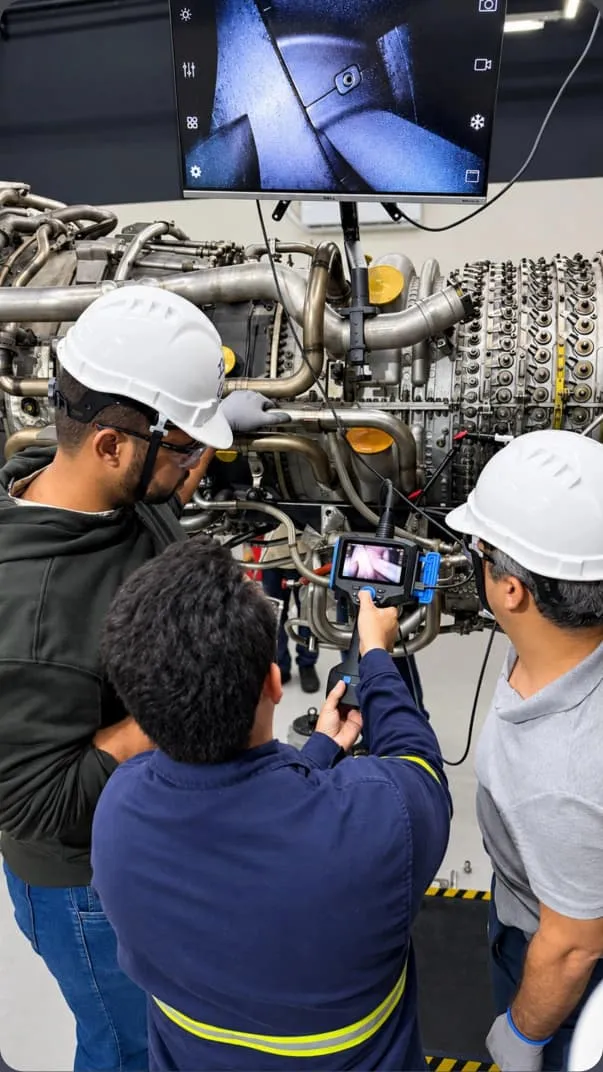
Miniature sensors are particularly valuable in aerospace inspection. Modern aircraft engines contain narrow cooling holes, internal passages, and densely packed components where access is extremely restricted. A large inspection probe may simply be unable to enter these areas. Ultra-small industrial endoscopes can provide visual access through tiny openings, allowing engineers to inspect surfaces for cracks, deposits, erosion, or other abnormalities without extensive disassembly. Automotive manufacturing is another important application. Modern engines, transmissions, fuel systems, and electric powertrain components contain increasingly complicated internal geometries. During manufacturing and maintenance, inspectors may need to examine cavities or channels that cannot be reached by conventional cameras. Smaller borescopes provide a practical solution while supporting faster and less invasive inspection workflows.
The combination of miniature sensors and advanced articulation technology further expands inspection capabilities. A small diameter alone does not guarantee comprehensive inspection. The probe must also be able to move through restricted spaces and position its camera toward the required surface. By combining miniature imaging components with precise two-directional or four-directional articulation, advanced endoscopes can navigate complex pathways and provide multiple viewing angles. Miniature imaging technology also supports customized inspection solutions. Different industrial applications have different requirements for probe diameter, viewing direction, focal distance, articulation, and image quality. By integrating compact sensors with specialized optical and mechanical designs, manufacturers can develop customized endoscopes for specific inspection challenges rather than forcing engineers to adapt their processes to a standard device.
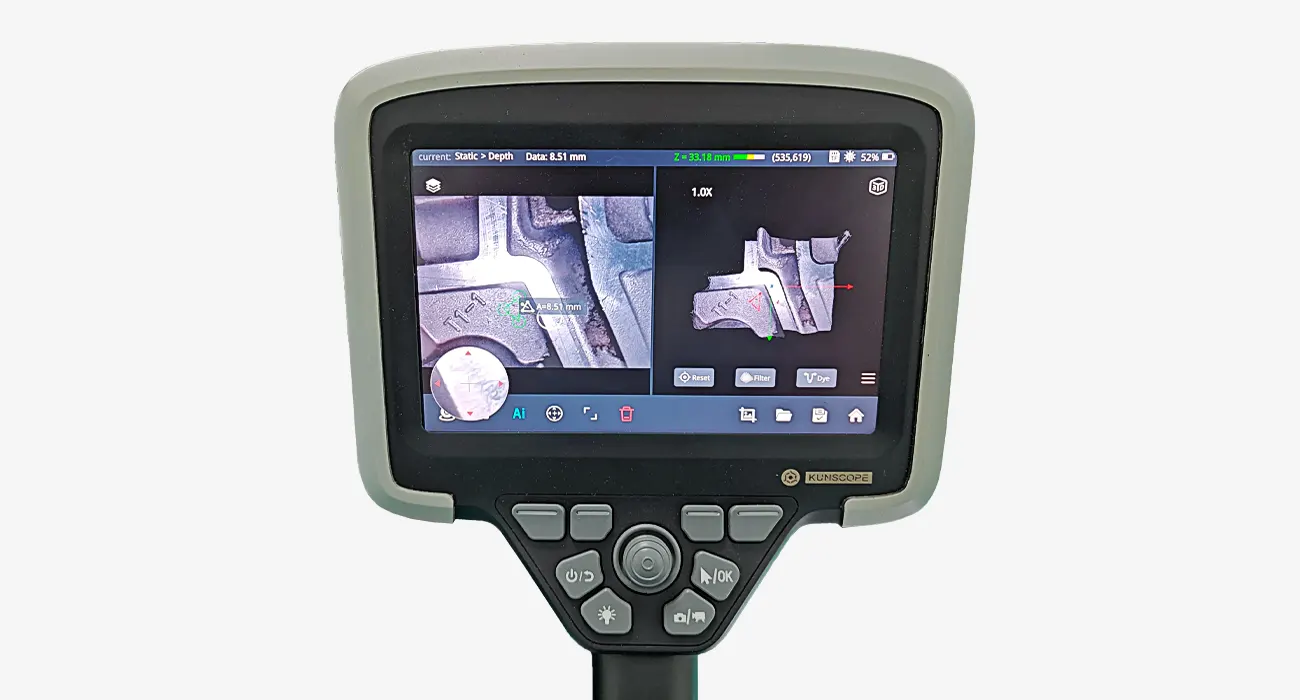
As sensor technology continues to advance, the possibilities will extend beyond simply making borescopes smaller. Future miniature imaging systems may offer higher resolution, improved low-light performance, faster image processing, and integrated measurement capabilities. Combined with AI-based defect recognition and 3D inspection technologies, these developments could turn ultra-small endoscopes into increasingly intelligent inspection platforms. For Zhongke Intelligent, miniature imaging technology is closely connected with the development of ultra-thin industrial endoscopes. The company's experience with probes reaching approximately φ1.2mm, combined with expertise in optical systems, image algorithms, electronics, and precision mechanical structures, demonstrates how multiple technologies must work together to achieve true miniaturization.